











Offered by:
Kristan Hauge Japanese Art
2-32 Saishoji-cho, Okazaki, Sakyo-ku,
Kyoto 606-8342 , Japan
Call Seller
81757515070
Showrooms
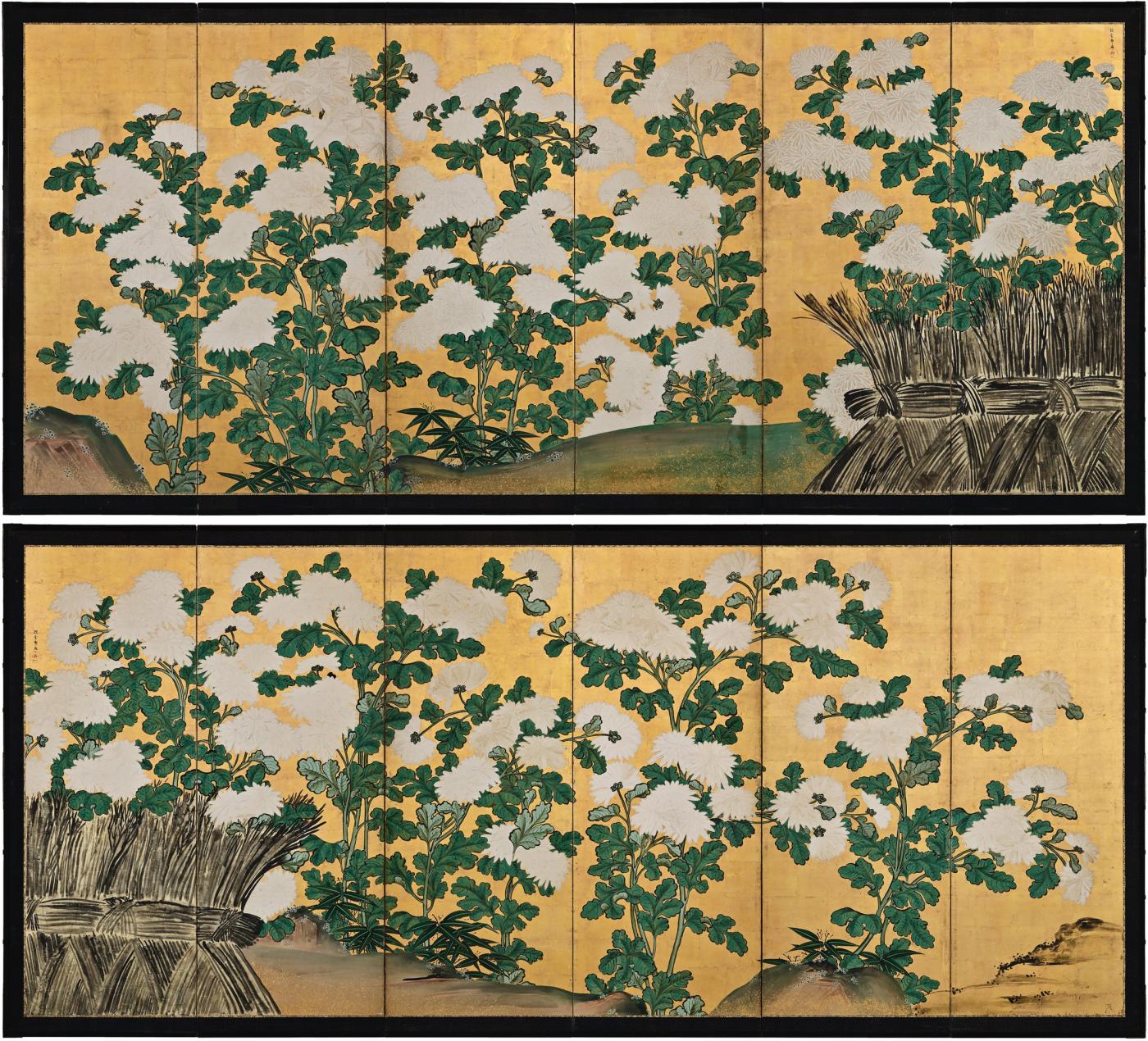
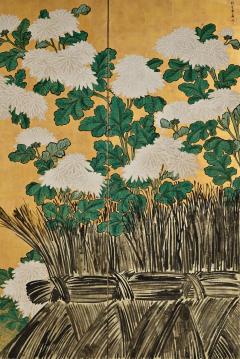
18th Century Japanese Screen Pair. One Hundred Flowers, Chrysanthemums
-
Description
Omori Soun (b. 1704)
Chrysanthemums – One Hundred Flowers
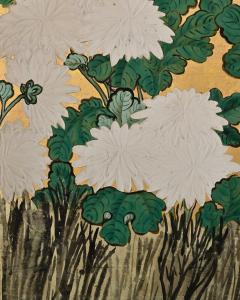
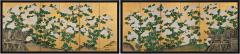
A Pair of Six-fold Japanese Screens. Ink, color, gofun and gold leaf on paper.
Dimensions (each screen): H. 171.5 cm x W. 378 cm (67.5” x 149”)
Price: USD 48,000
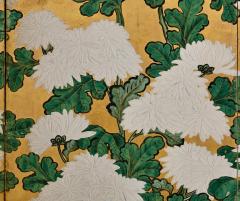
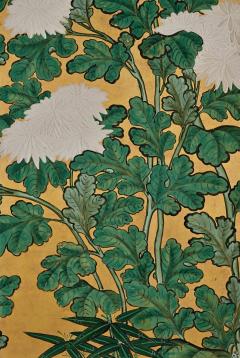
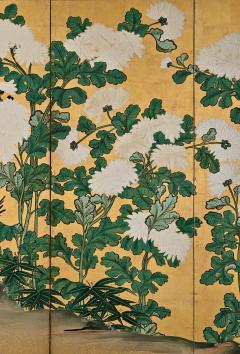
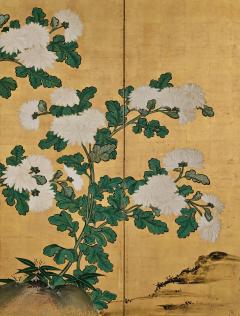
Dating to the mid 18th century this pair of six-panel Japanese screens feature a profusion of large, full blossomed chrysanthemum (kiku) flowers. White blooms elaborated with gofun and luxuriant green leaves protrude daringly from the woven straw fences and earthen mounds while sprigs of Japanese dwarf bamboo intersperse the chrysanthemum stalks. The large chrysanthemum’s in full bloom, dwarfing the fences and earthen mounds, convey a strong sense of the life of the flowers and represent an unabashed celebration of the season of autumn. The flowers are executed in a gesso-like technique called moriage which consists of building up the pattern in relief with a very finely powdered oyster shell-white mixture (gofun) combined with water and a binder. Chrysanthemums are a common subject in Japanese screen painting but rarely on such a bold and singular scale. This pair of mid 18th century screens with their lavish paintings and free form express the beauty of nature simply and clearly.
Chrysanthemum (kiku) was introduced from China well over 1000 years ago with the focus on the plant’s medical uses. By the Heian period chrysanthemums were already cultivated as ornamental plants. Since then, with the evolution of a native artistic sensibility heavily influenced by the passing seasons, the flower gained its place as one of the foremost symbols of autumn. Compositions such as this screen pair are known in Japanese as hyakka zu (painting of one hundred flowers).
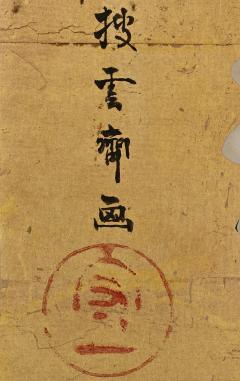
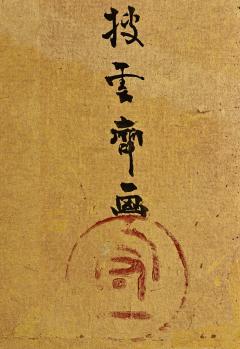
Omori Soun (b. 1704) studied under the Kyoto court artist Tsuruzawa Tanzan. His original name is Morikazu. He is known to have attained the ranks of Hokkyo in 1767 and Hogan in 1773. The present work predates 1767. Relatively little is known of the artist these days but surviving sources suggest that he was a highly renowned painter during his time. In his 30s to 40s, he drew picture models and book illustrations. Ehon Fukujukai, illustrated by Soun, was repeatedly retitled and republished at bookstores in Osaka, suggesting that he had a deep connection with Osaka. In 1765 he painted the fusuma (sliding doors) of Onjoji Homyoin; a sub-temple of Miidera in Otsu. In 1770 he also painted fusuma paintings for the Sento Imperial Palace in Kyoto. -
More Information
Documentation: Signed Period: 18th Century Styles / Movements: Asian Art Incollect Reference #: 845951 -
Dimensions
W. 149 in; H. 67.5 in; W. 378.46 cm; H. 171.45 cm;
Message from Seller:
Kristan Hauge Japanese Art, based in Kyoto's museum district since 1999, specializes in important Japanese screens and paintings for collectors, decorators, and museums worldwide. Contact us at khauge@mx.bw.dream.jp or +81 75-751-5070 for exceptional access to Japanese art and history.
More Listings from Kristan Hauge Japanese Art View all 64 listings
-
17th Century Japanese Screen. Ink Plum Tree & Birds by Kano Naonobu

-
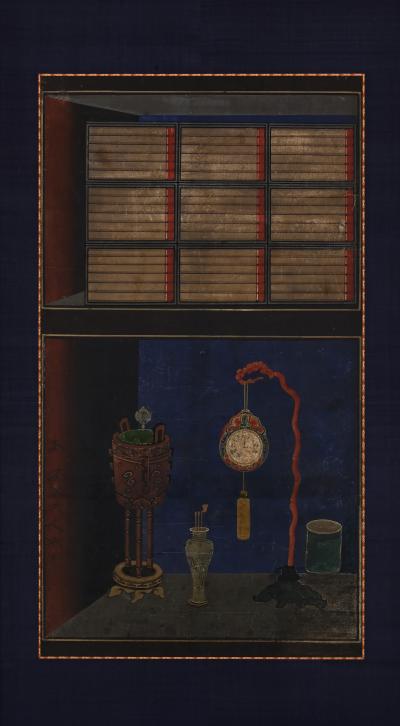
Chaekgeori painting. 19th Century Joseon. Books & Scholars’ Accouterments.
-
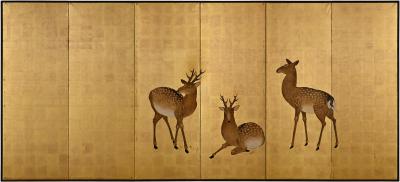
19th Century Japanese Deer Screen by Okamoto Toyohiko. Maruyama Shijo School
-
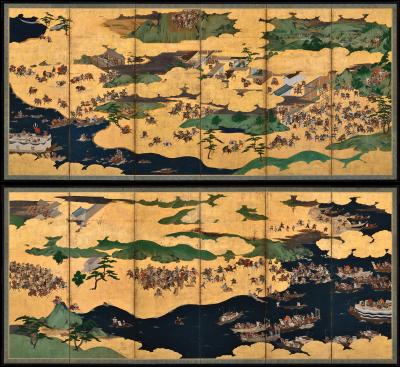
Late 17th Century Japanese Screen Pair. Battle of Ichi-no-tani and Yashima
-
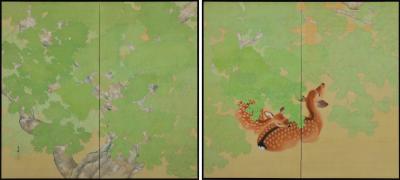
Early 20th Century Pair of Japanese Screens | Deer under Maple Trees
-
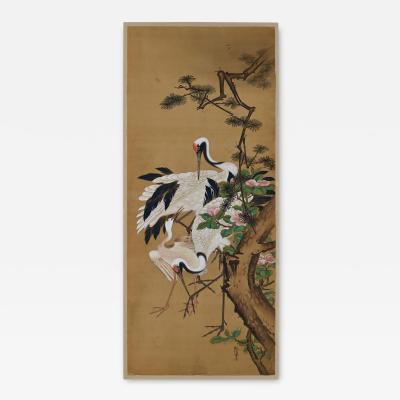
19th Century Japanese Silk Painting by Kano Chikanobu. Cranes, Pine & Camelia.
-
Japanese Screen. Early 20th Century. Furosaki Screen. Wagtail & Chrysanthemum

-
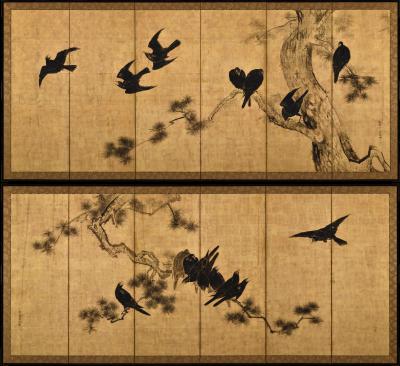
Mid 18th Century Japanese Screen Pair. Crows & Pines by Unkoku Toshuku
-
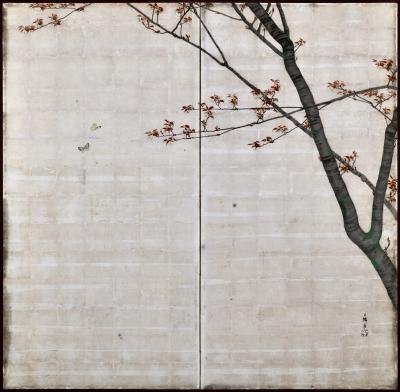
1895 Meiji Japanese Screen Pair. Cherry Blossoms & Autumn Maples on Silver Leaf
-
17th Century Japanese Screen Pair. Flock of Cranes. Ink and color on gold leaf.

-
Late 17th Century Japanese Screen. Puppy and Kittens on Gold Leaf.
-
Early 20th Century Japanese Screen Pair – Ink Pine Trees on Gold

-
Mitani Toshuku Unkoku School, 17th century. Japanese falcon painting.

-
Sakai Hoitsu (1761-1828) | Autumn flowers | Japanese screen painting

